
Treatment
Advanced diagnostics what to expect at i7-Clinic
Sep 2, 2025
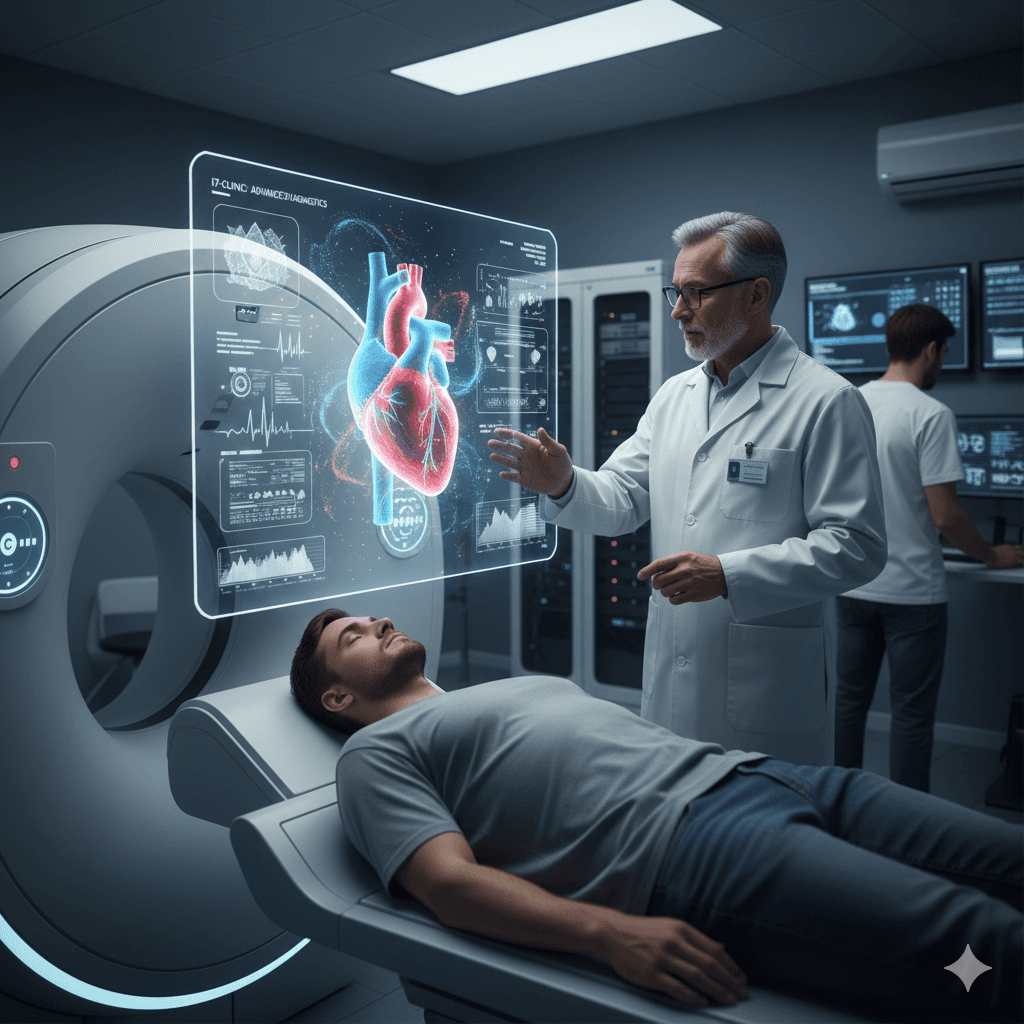
Modern medicine has given us tools our grandparents couldn't imagine. At i7-Clinic, we use them every day. Not to impress. To inform. To see what's actually happening inside your chest.
Diagnostics without accuracy is guesswork dressed up as medicine. We don't guess. We measure. We image. We test. We listen. Then we tell you what we found.
The electrocardiogram remains our first conversation with your heart. Twelve leads. Ten seconds. Thirty-nine measurements. It shows us the electrical activity that makes your heart beat. Irregular rhythms reveal themselves. Areas of stress show up. Damage from previous events becomes visible. It's simple. It's elegant. It works.
Echocardiography takes us deeper. Sound waves bounce off your heart's chambers and valves, creating images in real time. We see how well each chamber pumps. We measure the thickness of the walls. We watch the valves open and close. We assess the blood flow. All without cutting. All without radiation. Just sound and skill.
"The best diagnostic is the one that changes how you're treated." That's why we use stress testing. We watch your heart respond to exertion. Some problems hide at rest. They reveal themselves when your heart works harder. We can see them coming before they become emergencies.
CT angiography shows us the coronary arteries in stunning detail. We can see calcium deposits that indicate plaque. We can identify narrowing before it causes symptoms. We can assess the severity of disease. The scan takes minutes. The information lasts.
Cardiac catheterization remains the gold standard for certain questions. We thread a thin tube through your blood vessels to your heart. We inject dye. We take images. We measure pressures. We can see exactly where blockages live. We can even treat them in the same procedure.
Blood tests tell stories that imaging can't. Troponin levels reveal heart damage. BNP indicates heart failure. Cholesterol panels show your lipid profile. Inflammatory markers suggest risk. These numbers combine with imaging to create a complete picture.
Preparing for your visit matters more than you might think. Wear comfortable clothing. Avoid caffeine before stress testing. Bring a list of your medications. Write down your symptoms and when they occur. Arrive early. Breathe. We've done this thousands of times.
Our technicians are trained to make you comfortable. They explain what's happening. They answer questions. They know that anxiety makes your heart race, so they work to keep you calm. Your comfort helps us get better images and more accurate results.
The waiting room isn't where diagnosis happens. The procedure room is. The ultrasound machine is. The catheterization lab is. We take our time. We look carefully. We don't rush toward conclusions.
After your tests, we review everything together. We show you the images. We explain what we see. We discuss what it means for your health. We talk about next steps. No surprises. No medical jargon that leaves you confused. Just clear conversation.
Accuracy in diagnosis prevents unnecessary treatment and catches real problems. If your arteries are clear, we tell you that. You can breathe easier. If there's disease, we catch it early when options are better. If you need intervention, we know exactly what kind and where.
Advanced diagnostics aren't about technology for its own sake. They're about seeing clearly so you can live better. At Asma Clinic, we have the equipment and the expertise. What matters most is what we do with both.